DIY guide · Bookshelves

How to build a bookshelf.

From a first bookcase held together with screws to built-ins scribed to a crooked wall. What to buy, which joints to use, how long a shelf can be, and plans made to your measurements.

Get started

Freestanding bookcase8 panels · 35 screws · full build guide

Where to start

Pick the build that fits your experience.

A weekend

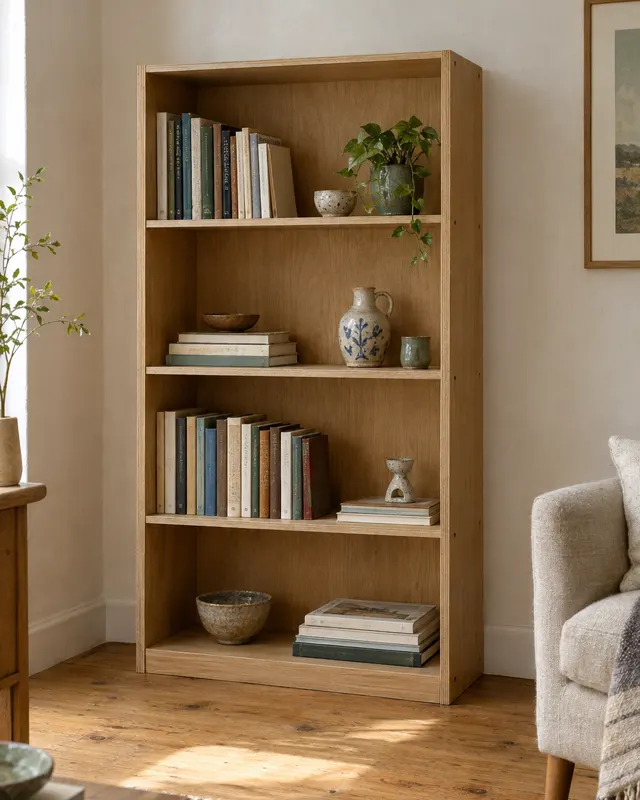
A freestanding bookcase in a weekend

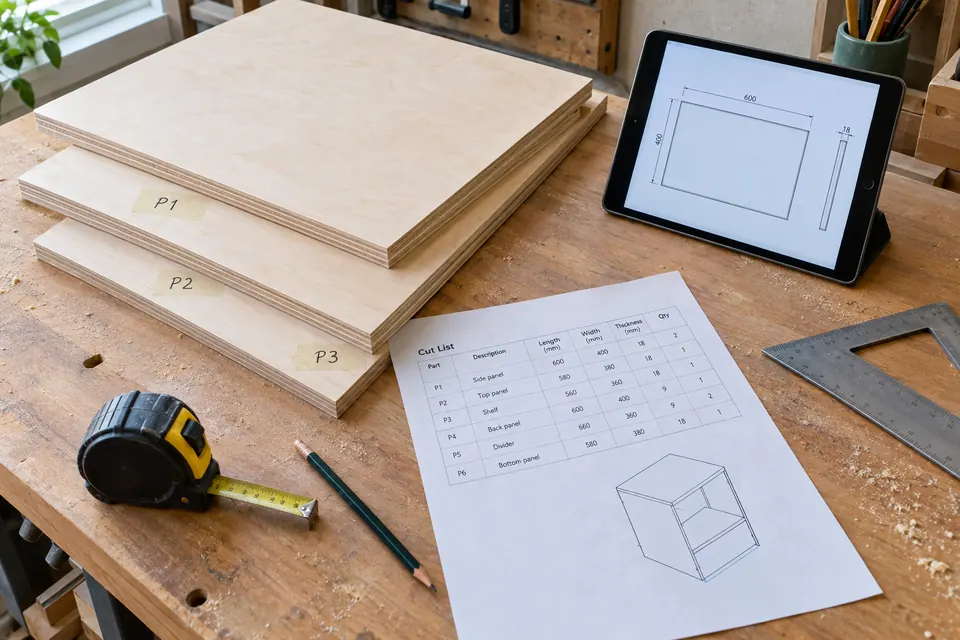
Two sides, a top, a bottom, fixed shelves and a back, all held with screws. Have the panels cut where you buy them and you only drill and drive.

You’ll learn

  • Measuring and marking
  • Drilling straight
  • Driving screws flush

You’ll need

  • Drill-driver
  • Combination square
  • Two clamps

Two weekends

Cut your own panels, hide the joints

Cut plywood yourself with a guided saw, join with pocket screws or dowels, iron on edge banding and drill a row of holes for adjustable shelves.

You’ll learn

  • Cutting sheet material straight
  • Pocket-hole joinery
  • Edge banding
  • Shelf-pin holes

You’ll need

  • Track saw or circular saw with a rail
  • Pocket-hole jig
  • Shelf-pin jig

One to three weekends

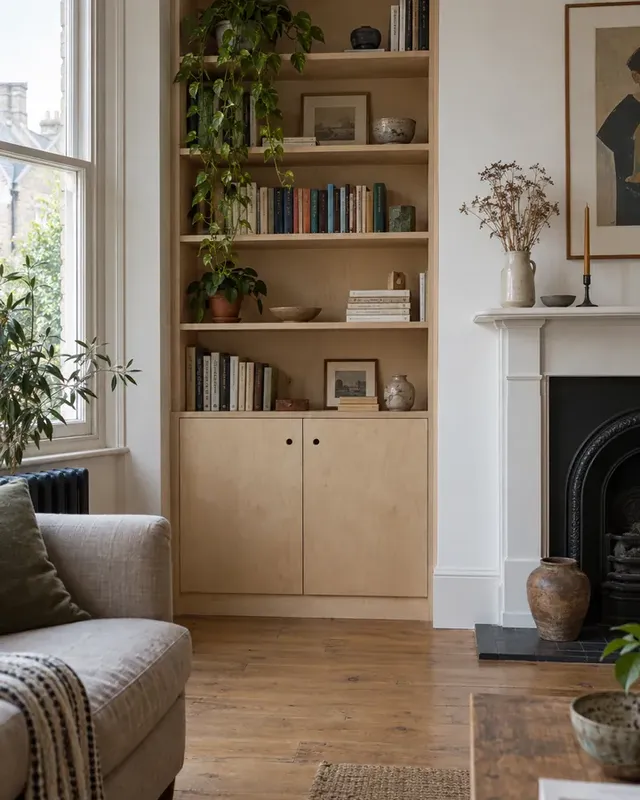
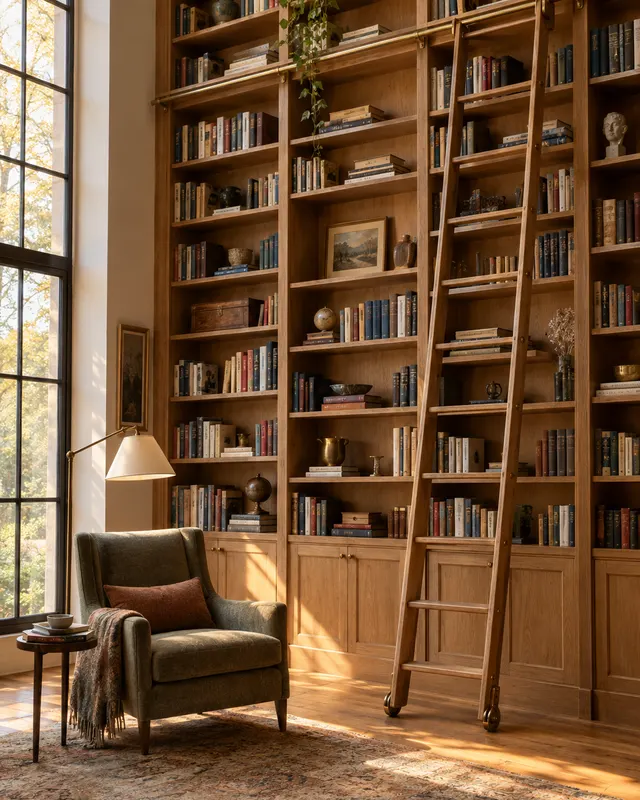
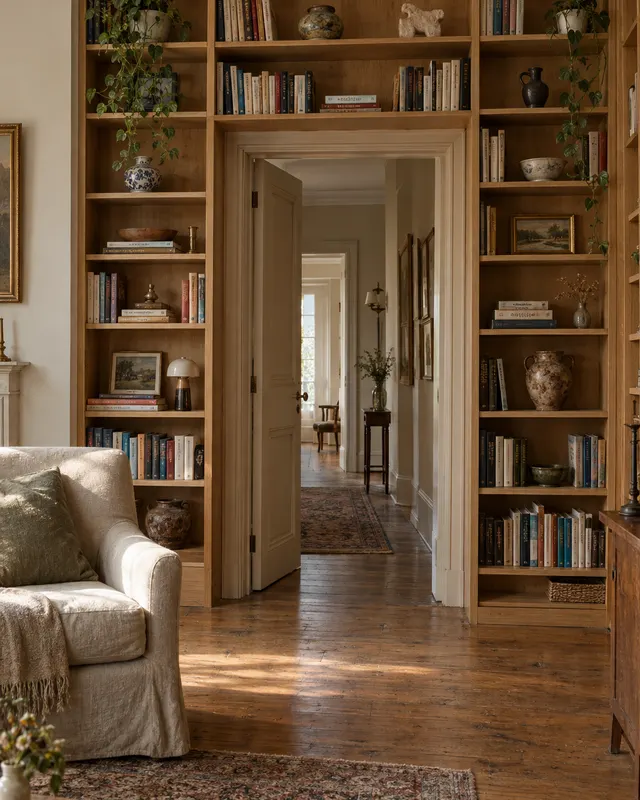
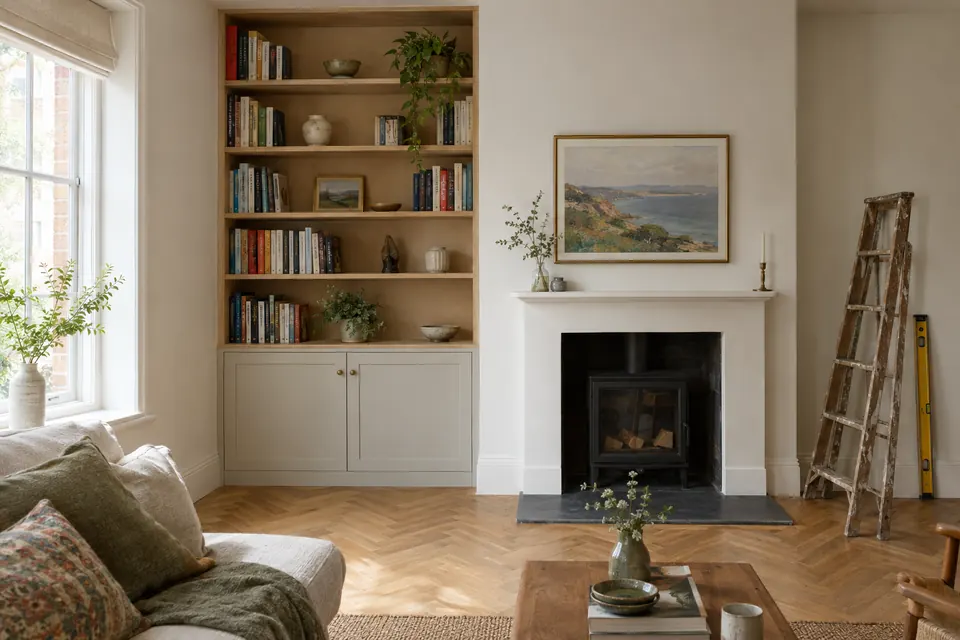
Wall to wall, floor to ceiling

Fit cabinets into an alcove, scribe the edges to walls that are never straight, rout housings for the shelves and finish it all in paint.

You’ll learn

  • Scribing to walls and floors
  • Routing housings
  • Face frames and trim
  • Fixing into studs and masonry

You’ll need

  • Router
  • Spirit level and laser
  • Multi-tool for scribing

Types of bookshelves

8 kinds, and how hard each one is.

Plans

4 plans, made to your measurements.

Each one becomes a 3D model, a cut list, drilling maps and step-by-step instructions, at the size you need.

Before you design

How long can a shelf be?

Books are heavy. Set the span, the material and what goes on it, and see how far the shelf bends.

Material
On the shelf

A rule of thumb for a shelf 280 mm deep resting on two supports, not an engineering check. Caminu checks every shelf in your plan.

Before you design

What to decide first.

Measure the wall, not the furniture

Walls are rarely straight. Measure the width at the floor, the middle and the ceiling, and the height at both sides. Work from the smallest numbers: a built-in is made slightly undersize and scribed to the wall.

Decide what goes on it

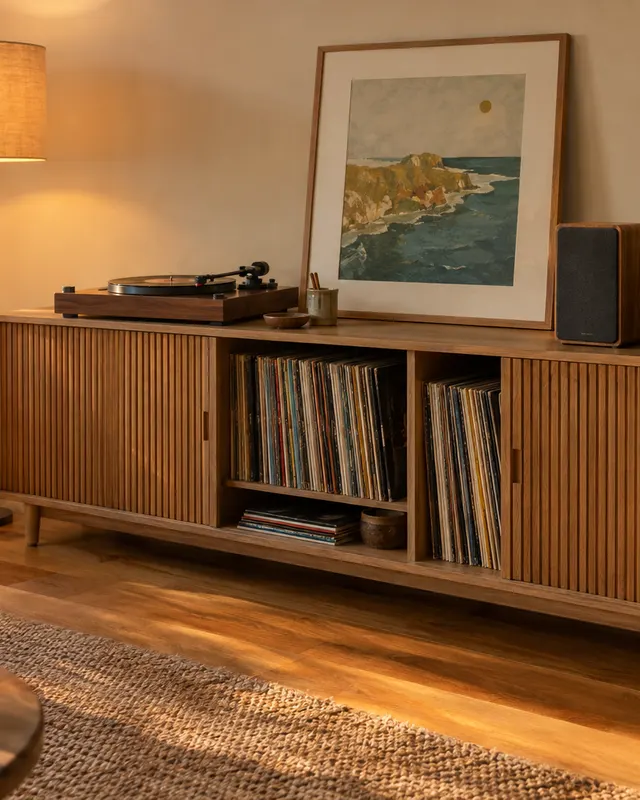
Paperbacks need about 200 mm of height and 150 mm of depth. Art books and vinyl records need 330 mm or more of both. Sort what you own into two or three heights before you set the shelf spacing.

Fixed or adjustable shelves

Fixed shelves hold the sides together and stop a tall bookcase from bowing. Adjustable shelves let you change your mind. Most designs use both: at least one fixed shelf around mid-height, with adjustable ones above and below.

Keep the spans honest

A shelf full of books is heavy. In 18 mm birch plywood, keep spans under about 750 mm, or add a centre divider, a thicker shelf or a stiffening strip along the front.

Joints

Four ways to hold a shelf.

Start with screws. Add the others as you get the tools.

  • First build

    Screwed butt joint

    The panel's end meets the side and screws go through from the outside. Pre-drill and countersink, and it holds for decades. The heads show, so plan where.

    Drill, countersink, screws

  • Getting confident

    Pocket screws

    A jig drills an angled hole on the hidden face, and the screw pulls the joint tight from there. Strong, fast and invisible from the outside.

    Pocket-hole jig

  • Built-ins

    Housing (dado)

    A groove across the side that the shelf sits in. The shelf can't drop, the bookcase stays square, and glue does the rest.

    Router and guide

  • Getting confident

    Shelf pins

    A row of holes with small pins that the shelf rests on. Move a shelf in seconds when your books change.

    Shelf-pin jig, 5 mm bit

Materials

What to build it from.

MaterialCostStiffnessEdgesFinishBest for
Birch plywood€€€Layered edge: show it off or band itOil, lacquer or paintAlmost everything. Holds screws well.
MDF€€€Smooth, paints well once sealedPaintPainted built-ins with short spans
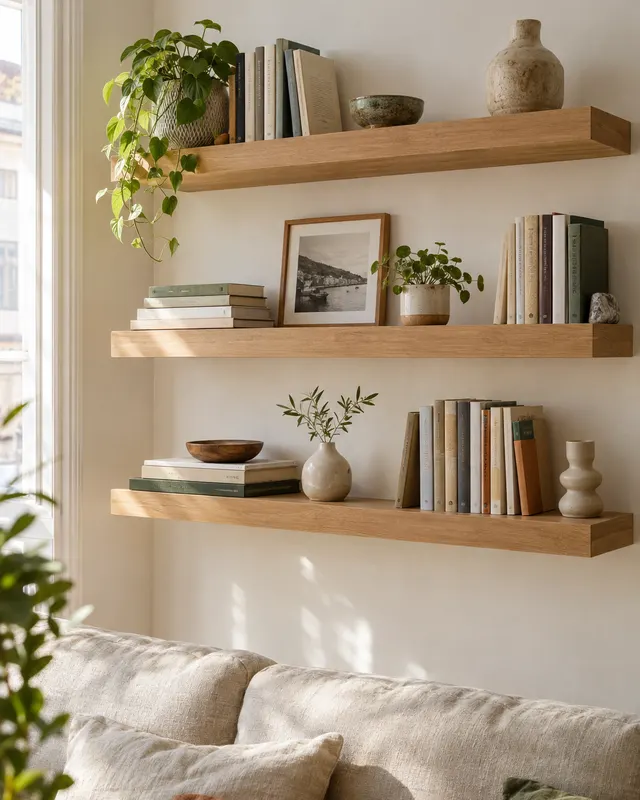
Pine boards€€€Solid wood, no banding neededOil, wax or paintRustic bookcases and floating shelves
Oak or walnut€€€Solid wood, no banding neededHardwax oilFloating shelves and heirlooms
Melamine chipboard€€€Needs edge bandingReady finishedInside cupboards, short spans only

Tools

Start small, add machines later.

The starter kit

Enough for every first-build plan here.

  • Drill-driverDrills every hole and drives every screw. An 18 V one with two batteries.
  • Drill bits and a countersinkPilot and clearance holes, and a countersink so heads sit flush.
  • Combination square and tapeMarking holes square to the edge, checking corners.
  • Two clampsA third hand while you drive the screws.
  • Sanding block120 and 180 grit for the edges before finishing.
  • Safety glasses and a maskFor drilling, sanding and finishing.

No saw? Most timber merchants cut sheets to a list. Take the cut list from your plan and pick the panels up ready to drill.

Worth buying later

Each one opens up a new kind of build.

  • Track sawCut full sheets yourself, dead straight and splinter-free.
  • Pocket-hole jigHidden, strong joints without clamps and glue-ups.
  • RouterHousings for shelves, rebates for backs, rounded edges.
  • Shelf-pin jigRows of holes that line up for adjustable shelves.
  • Table sawFast, repeatable cuts. Needs space and care.
  • Edge-banding ironCovers plywood and chipboard edges in minutes.

Safety

Fix it to the wall before you load it.

A tall bookshelf full of things can tip when someone pulls on it or a child climbs it. Every plan ends with the wall fixing for that piece. Here is what holds in which wall.

  • Brick or concreteWall plugs and 5 mm screws, at least 40 mm into the wall
  • Stud wall with a stud behindA long screw straight into the stud
  • Plasterboard, no studRated metal cavity anchors, two or more
  • Any wall, freestandingAn anti-tip strap or bracket near the top

Something else in mind?

Describe your bookshelf.

Say it the way you would to a carpenter. Caminu draws it, checks the spans and writes the guide.

Sizes in mm, cm or inches all work.

Questions

Bookshelves, answered.

Is it cheaper to build a bookshelf than to buy one?

Than a flat-pack one, rarely. Than a solid or made-to-measure one, almost always. Sheet material is the biggest cost: a 900 mm bookcase comes out of one or two sheets of plywood, and the screws, sandpaper and finish add little.

What is the best wood for a bookshelf?

Birch plywood for most people. It is stiff, holds screws well, takes oil or paint and comes in large flat sheets. MDF is cheaper and paints beautifully but sags more and needs care with screws. Solid wood looks best and costs most.

How deep should a bookshelf be?

250 to 300 mm suits most books. Go to 330 mm or more for art books and vinyl records.

How long can a shelf be before it sags?

In 18 mm birch plywood, about 750 mm under a full row of books. Longer shelves need to be thicker, get a stiffening strip along the front or a centre divider. Try the sag check on this page, and Caminu checks every shelf in your plan.

Do I need a saw to build a bookshelf?

No. Most timber merchants and DIY stores cut sheet material to a list, accurately and for a small fee. Take the cut list from your plan and you only need a drill-driver to put it together.

How do I fix a bookshelf to the wall?

With an anti-tip fixing into something solid: plugs and screws for masonry, a screw into a stud for stud walls, and rated cavity fixings where there is no stud. Fix it before you load it.

Fixed or adjustable shelves?

Both. At least one fixed shelf around mid-height holds the sides together and stops the bookcase racking; adjustable shelves above and below let you change your mind.

From the blog

Read before you build.

Keep going

Other things to build.

What would you build if it only had to fit your room?

Show Caminu your room and describe the piece. You get the 3D model, the cut list and the assembly guide.

Start designingSee pricing