DIY guide · Desks

How to build a desk.

Desks on legs, desks built into alcoves and desks that fold off the wall, at the height that suits you. What to build, how it goes together, and plans made to measure.

Get started

Illustration
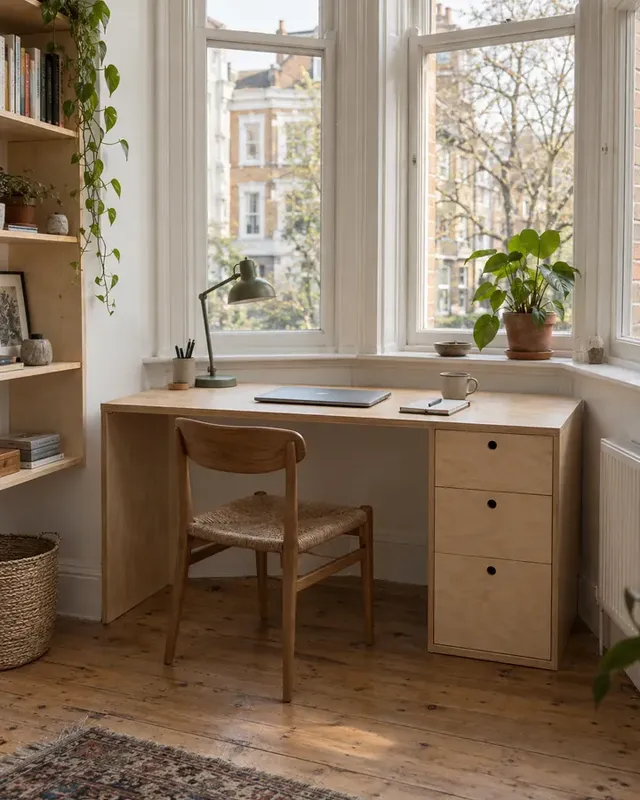
Plywood desk with drawersA plan to start from · 1,500 mm wide

Where to start

Pick the build that fits your experience.

Types of desks

6 kinds, and how hard each one is.

Plans

2 plans, made to your measurements.

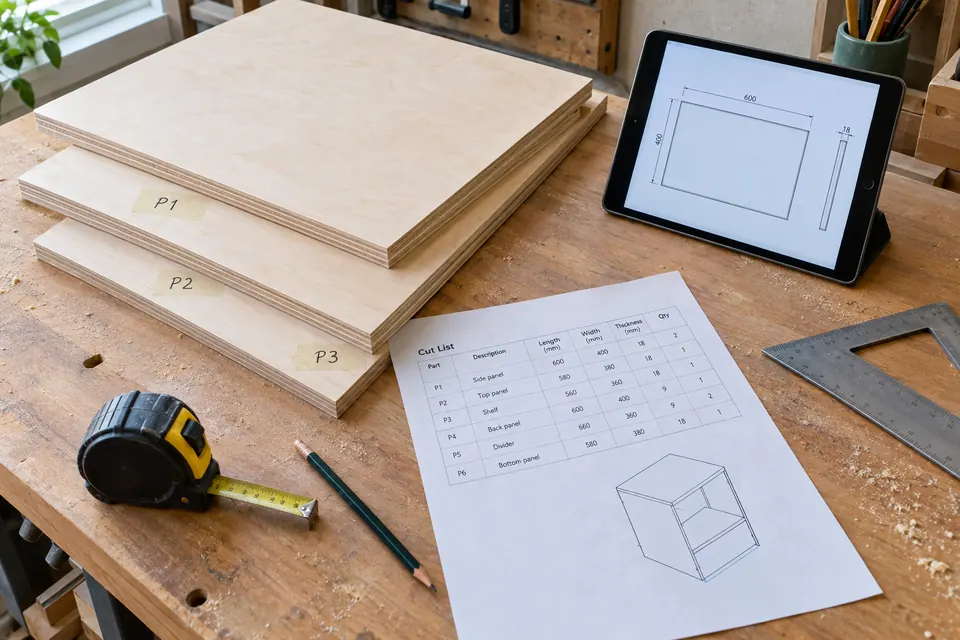
Each one becomes a 3D model, a cut list, drilling maps and step-by-step instructions, at the size you need.

Fit it to you

How high should your desk be?

Set your height, sitting or standing. See the desk, chair and screen heights that keep your shoulders down and your back straight.

Working

From average body proportions. Try a few centimetres either way; your plan uses the numbers you give it.

Before you design

What to decide first.

Height is personal

720 to 750 mm suits most adults in a standard chair. If you can, sit at a table and measure where your forearms rest level.

Depth for the work you do

600 mm is enough for a laptop. A monitor at arm’s length wants 700 mm or more.

Stop the top from sagging

A top that spans more than about 1,200 mm between supports needs a rail under the back edge, or a thicker top.

Cables

Decide where the power comes from. A grommet at the back and a tray underneath keep the surface clear.

Joints

How a desk stays solid.

A desk gets leaned on, written on and pushed. These four details keep it steady.

  • First build

    Legs and a back rail

    Legs fixed at the corners and a rail under the back edge. The rail stops the top racking and sagging.

    Brackets or bolts

  • Getting confident

    Drawer runners

    Full-extension runners for the pedestal, so the back of the bottom drawer is as easy to reach as the front.

    Runners and a fitting jig

  • First build

    Cable grommet

    A hole at the back of the top with a grommet in it, and a tray underneath for the extension lead.

    60 mm hole saw

  • Built-ins

    Wall-hung on a cleat

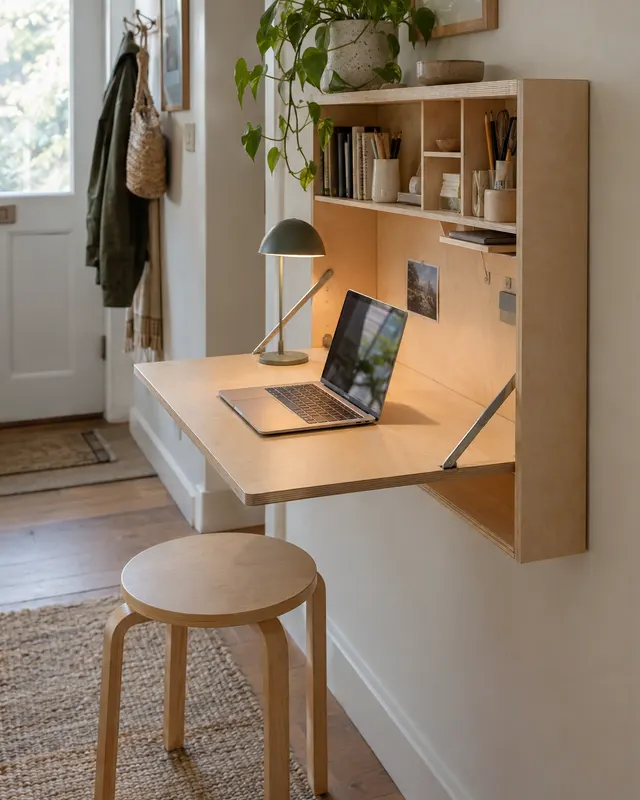
    Shelves and fold-down desks hang on a bevelled cleat. Level it once and the weight pulls everything tight to the wall.

    Saw set to 45°, spirit level

Materials

What to build it from.

MaterialCostStiffnessEdgesFinishBest for
Birch plywood€€€Layered edge: show it off or band itOil or lacquerTops and pedestals that take knocks
Furniture linoleum on plywood€€€Band the plywood edge in oakReady finishedWarm, matte tops that are kind to wrists
Oak€€€Solid wood, no banding neededHardwax oilTops you will touch every day
MDF€€€Smooth, paints well once sealedPaintPainted pedestals and shelves

Tools

Start small, add machines later.

The starter kit

Enough for every first-build plan here.

  • Drill-driverEvery hole and every screw. An 18 V one with two batteries.
  • Drill bits and a countersinkPilot and clearance holes, and heads that sit flush.
  • Combination square and tapeA top that is square to the wall it meets.
  • Two clampsHolding the top while you fix the legs.
  • Sanding blockA front edge that is soft on your forearms.
  • Safety glasses and a maskFor drilling, sanding and finishing.

No saw? Most timber merchants cut sheets to a list. Take the cut list from your plan and pick the panels up ready to drill.

Worth buying later

Each one opens up a new kind of build.

  • Track sawA long top cut dead straight from a full sheet.
  • Pocket-hole jigRails and pedestals joined with hidden screws.
  • RouterRounded front edges and cable channels.
  • 60 mm hole sawClean holes for cable grommets.
  • Random orbital sanderA large top smooth in minutes.
  • Laser levelShelves and a built-in top level across the wall.

Safety

Fix wall-hung desks and shelves properly.

A desk on legs needs no fixing. A built-in top, a fold-down desk or the shelves above carry someone leaning on them, so they fix into something solid.

  • Brick or concreteBattens or a cleat on plugs and 6 mm screws
  • Stud wallInto every stud the batten crosses
  • Plasterboard, no studShelves only, on rated metal cavity anchors
  • Fold-down deskFixings rated for someone leaning on the open flap

Something else in mind?

Describe your desk.

Say it the way you would to a carpenter. Caminu draws it, checks the spans and writes the guide.

Sizes in mm, cm or inches all work.

Questions

Desks, answered.

How high should a desk be?

720 to 750 mm suits most adults in a standard chair. If you can, sit at a table and measure where your forearms rest level.

How deep should a desk be?

600 mm is enough for a laptop. A monitor at arm’s length wants 700 mm or more.

How long can a desk top be without a support?

In 18 mm plywood, about 1,200 mm between supports. Beyond that add a rail under the back edge, a thicker top or a leg in the middle.

Can I build a standing desk?

A fixed one, yes: the desk height check on this page gives the height for you. For one that moves, buy a motorised frame and make the top.

From the blog

Read before you build.

Keep going

Other things to build.

What would you build if it only had to fit your room?

Show Caminu your room and describe the piece. You get the 3D model, the cut list and the assembly guide.

Start designingSee pricing